
Working with Water
In the desert, rain arrives all at once. The question is whether it rushes off the property or stays to do some good.
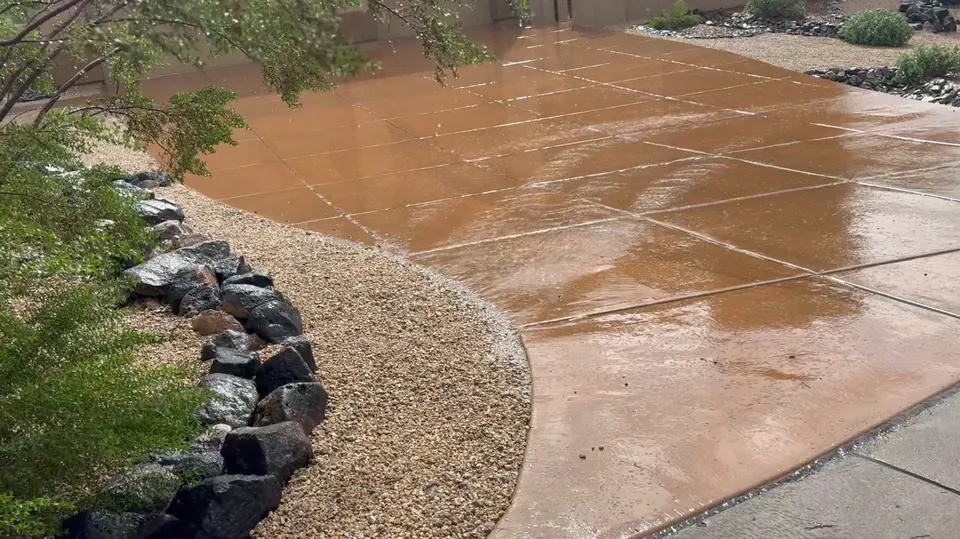
The first step in working with water is simply watching it. During a storm, I follow the rain: where it lands, where it gathers, where it picks up speed and where it leaves the property. Hard surfaces like roofs and driveways shed water quickly, and on a hillside that water can carry soil with it.
Once you can see the path water takes, you can start to guide it. Instead of treating rain as a problem to get rid of, the goal is to slow it down, spread it out and let it soak in where plants can use it.
From the roof
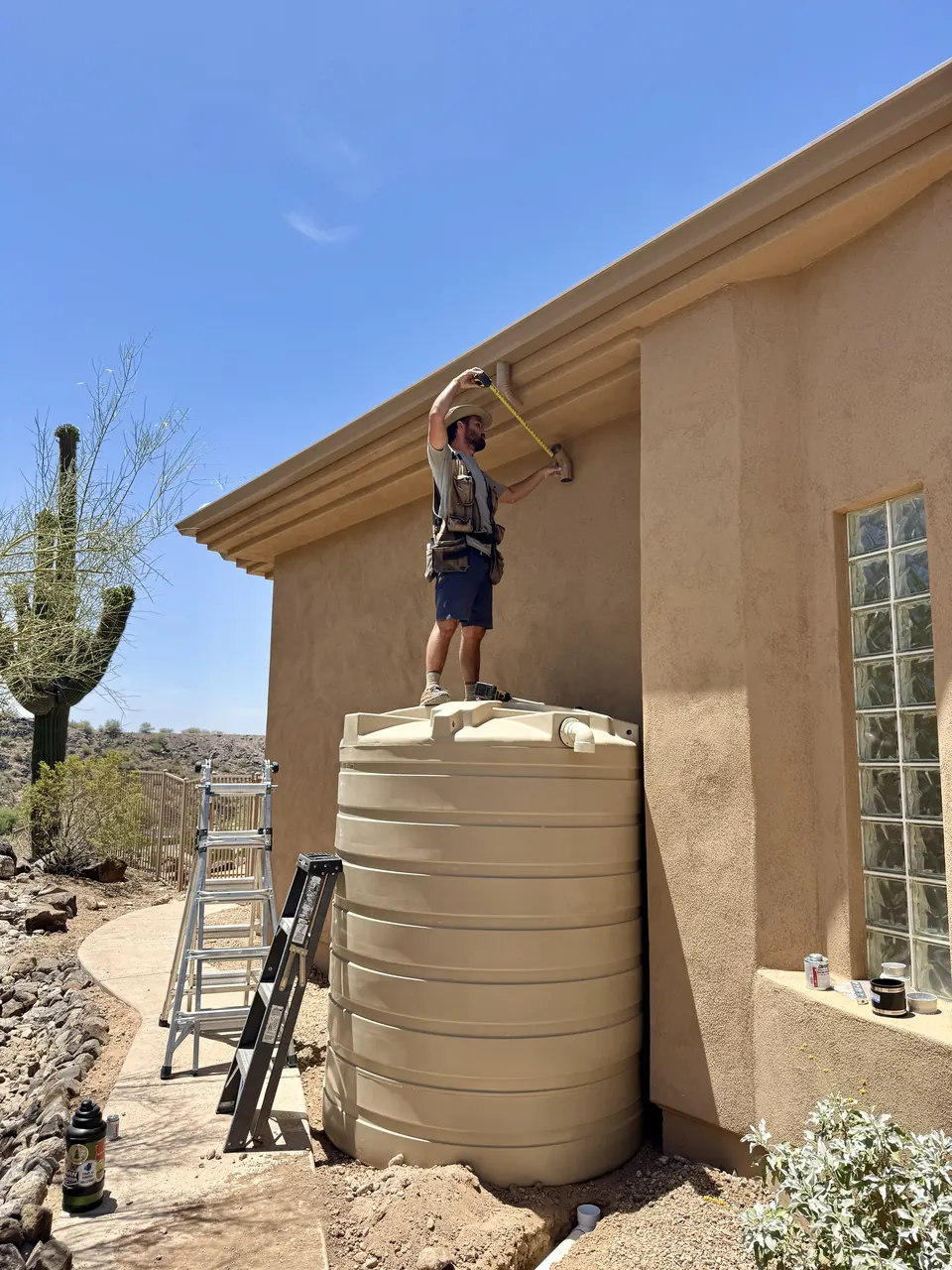
A roof collects a surprising amount of water. Gutters gather it, and from there it can be stored in a tank for later use or directed into the landscape.
Through the landscape
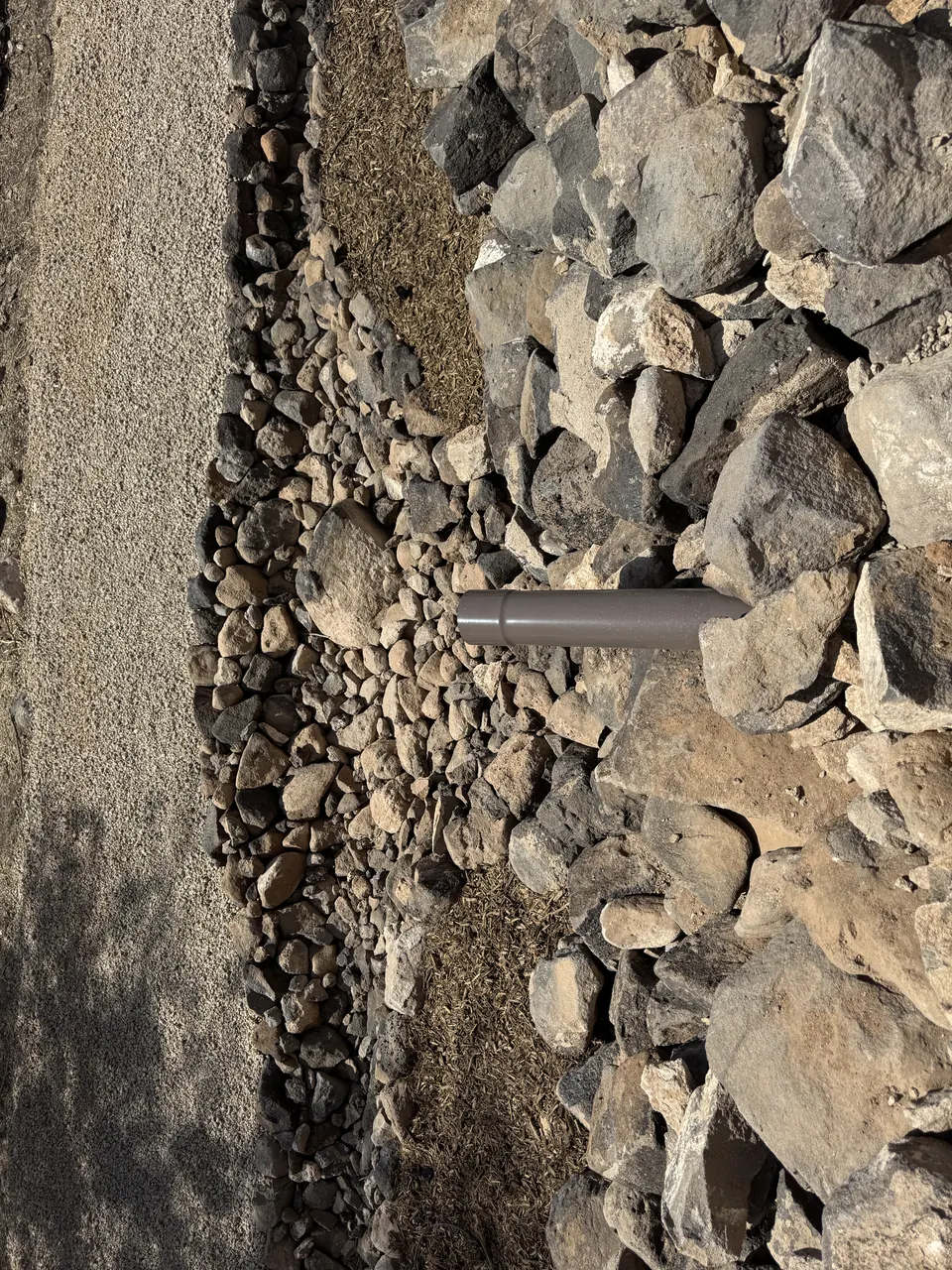
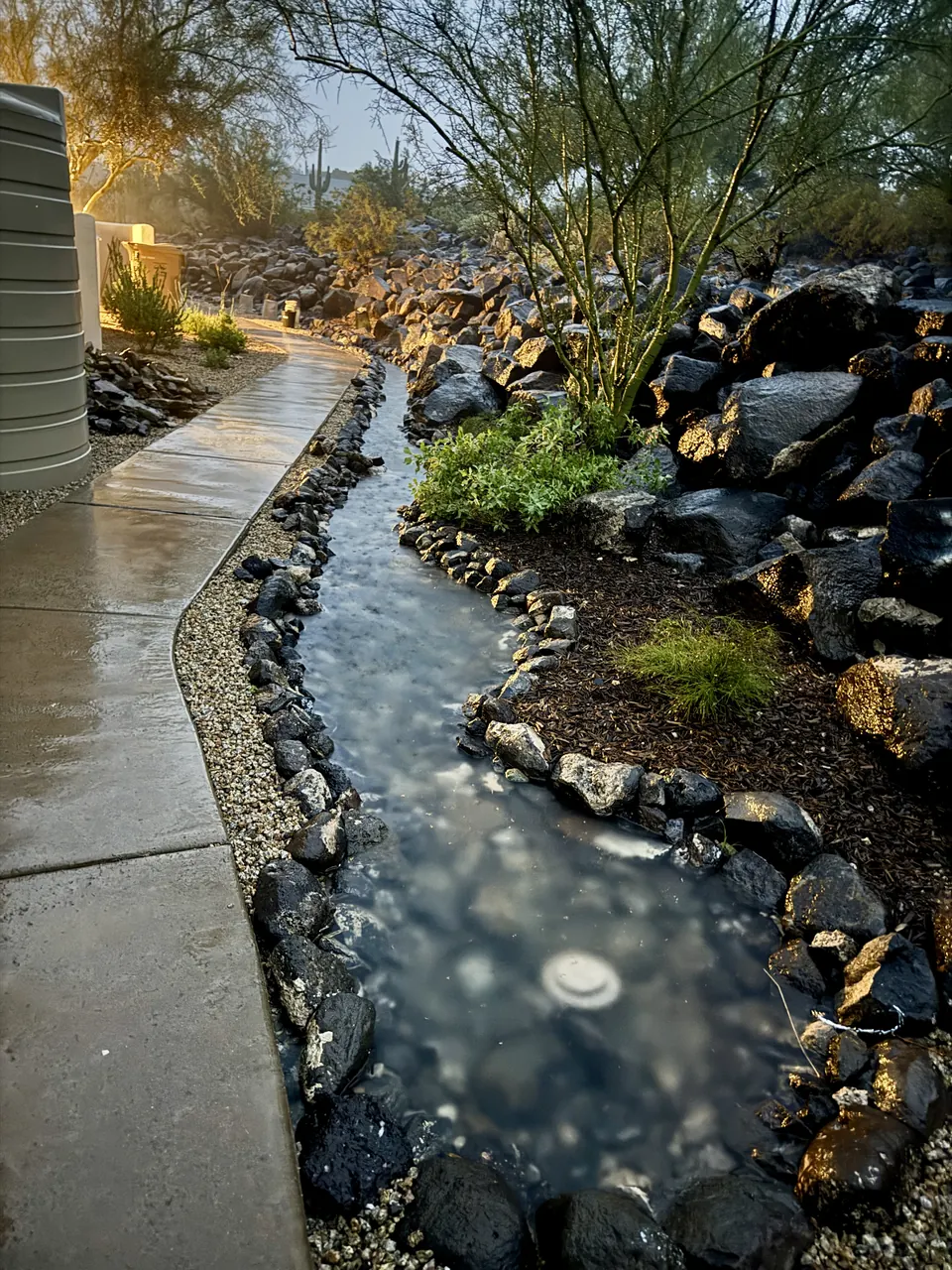
Rock-lined channels and swales move water gently from one place to the next. The rock slows the flow and protects the soil, and planting along the edges puts that moisture to work.
Into the ground
Finally, basins give water a place to pause and sink in. After a storm they fill, and over the following hours and days that water soaks into the soil, supporting trees and plants long after the rain has passed.
I'll keep sharing how this system performs through the seasons: what works, what needs adjusting and what the land teaches me along the way.